
Scott County Warrant Searches
Virginia's Online Case Information System is the best first stop for an adult criminal or traffic case. It is not a warrant roster, though. The official state page explains the coverage. General District criminal and traffic details are public there, along with selected Circuit Court cases. Match the product to the paper you hold. Skip broad name searches across unrelated localities. For a Scott County misdemeanor or traffic matter, choose the Scott General District Court product. A felony file goes through the Circuit Court route where one exists. Call the Circuit Clerk if the case does not appear. JDR information stays off the public system. Whatever Scott County warrant you are chasing, search your own name with the court identifier printed on the notice.
- Read the court, case number, hearing date, and issuing agency from the summons or notice.
- Choose the Scott General District product for traffic and adult misdemeanor matters.
- Search by last, first, and middle name, case number, or hearing date when that control is offered.
- Call the clerk to ask whether a capias, warrant, show-cause setting, or new appearance is recorded.
- Call the sheriff or named town police for service routing, then ask how to confirm a court update.
The Virginia case-information page describes each public product and its limits. For a Scott County warrant question, it is a starting point, not the final word.
Why OCIS Is Not a Warrant Roster
OCIS shows court case information. It is not a statewide list of active warrants. VCIN and NCIC serve authorized criminal-justice agencies only. A public case result may list a charge or hearing yet omit service details, a sealed process, or a fresh entry that has not posted yet. Virginia's public products describe court files, not a warrant inventory. Circuit cases can still require a local clerk search in Scott County. The official statewide search page presents the court product itself, with no warrant-status control.
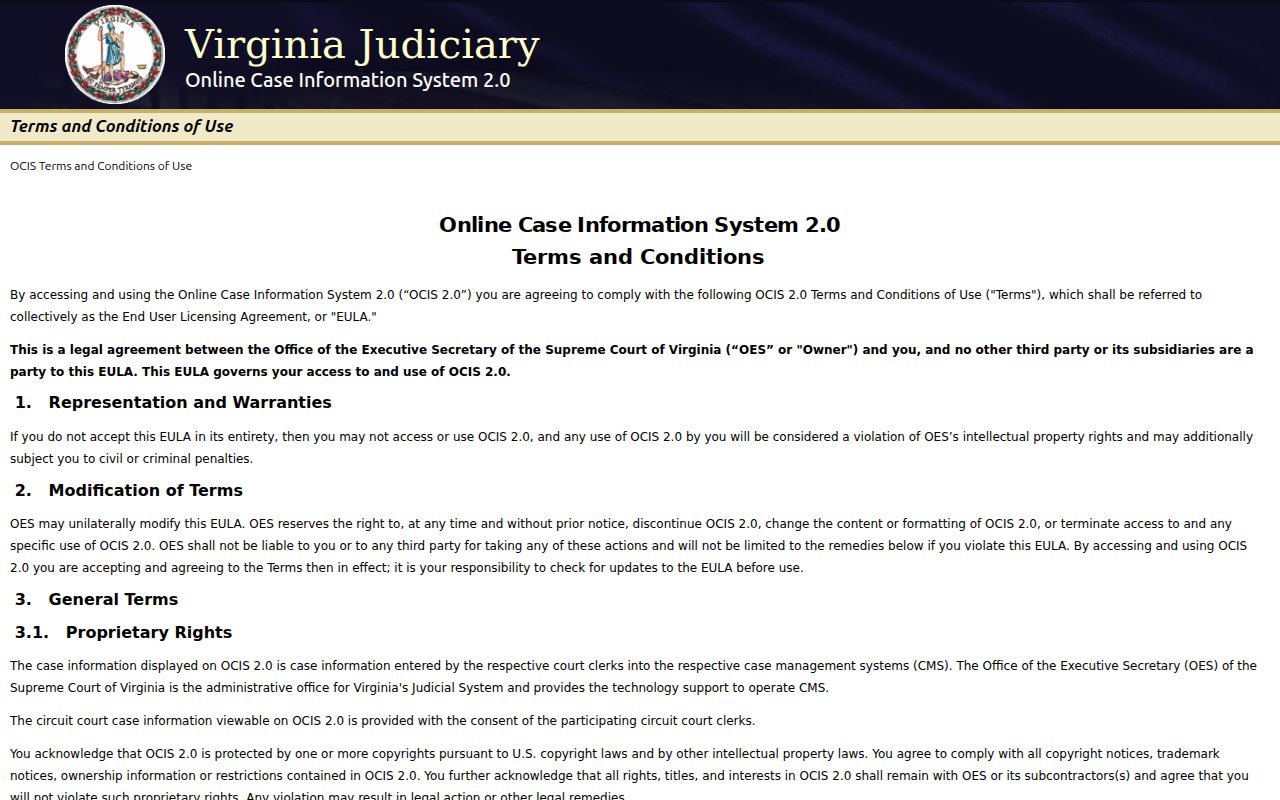
The public interface helps you find a case; the clerk confirms the court process. It cannot answer warrant status. The Virginia State Police VCIN page describes agency-only access, not a public self-search a Scott County resident can run.
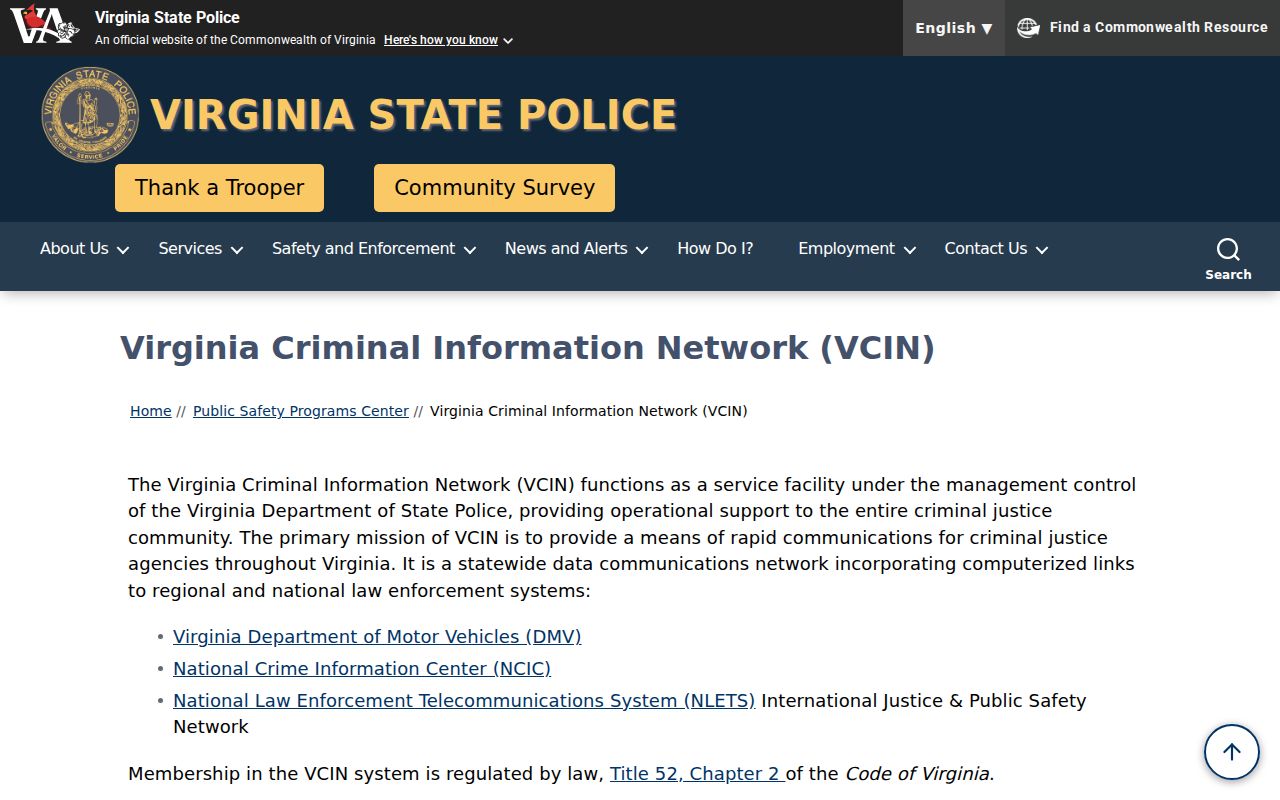
Ask the clerk to confirm your own court record.
Scott County Warrant Search Fields
The official public search instructions call for court selection, a name, case number, and hearing date. Nothing more. No date-of-birth, warrant-number, bond, or active-status filter appears. Plan a Scott County warrant search around only the fields the live court page actually confirms.
| Field or control | Use | What is known |
|---|---|---|
| Court / locality | Select Scott and the correct court product | Choose GDC or Circuit where available |
| Name | Search the person’s own court record | Last, first, and middle name are named in instructions |
| Case number | Use the exact number on court papers | Local format is not published |
| Hearing date | Use the date on a summons or notice | Available in the official instructions |
| Payment action | Only for an eligible GDC matter | “Mark For Payment” may appear in the action column |
A common name can return several cases. One spelling difference can return none. In a Scott County warrant search, compare the court, locality, and case number, then let the clerk confirm the right entry, since the instructions promise no wildcard behavior.
The Circuit Court Search Is Local
Virginia's self-help page is blunt: no single statewide Circuit Court search exists. Each circuit runs its own system. Scott County is no exception. If an online result stays out of reach in Scott County, call the Circuit Court Clerk at 276-386-3801, Suite 102, at the Gate City courthouse. The combined General District and JDR clerk sits in Suite 203 at 276-386-7341. Both Scott County counters share one courthouse. Still, the court name and case type decide which office owns the request. The Scott Circuit Court page posts the local contact and criminal scheduling information.
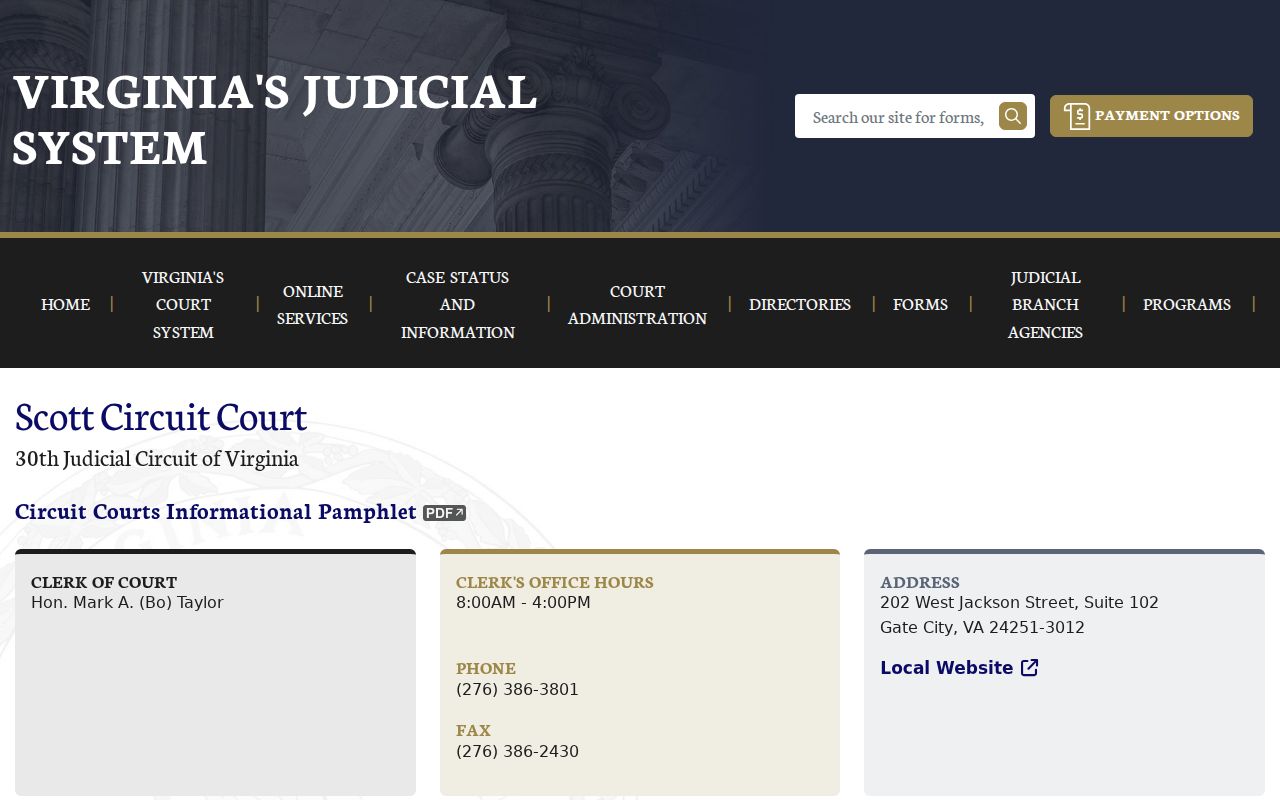
A local clerk is the fallback when the statewide search skips a Circuit file. The Virginia find-a-case guidance sends Circuit Court searchers in Scott County straight to the individual court or clerk.
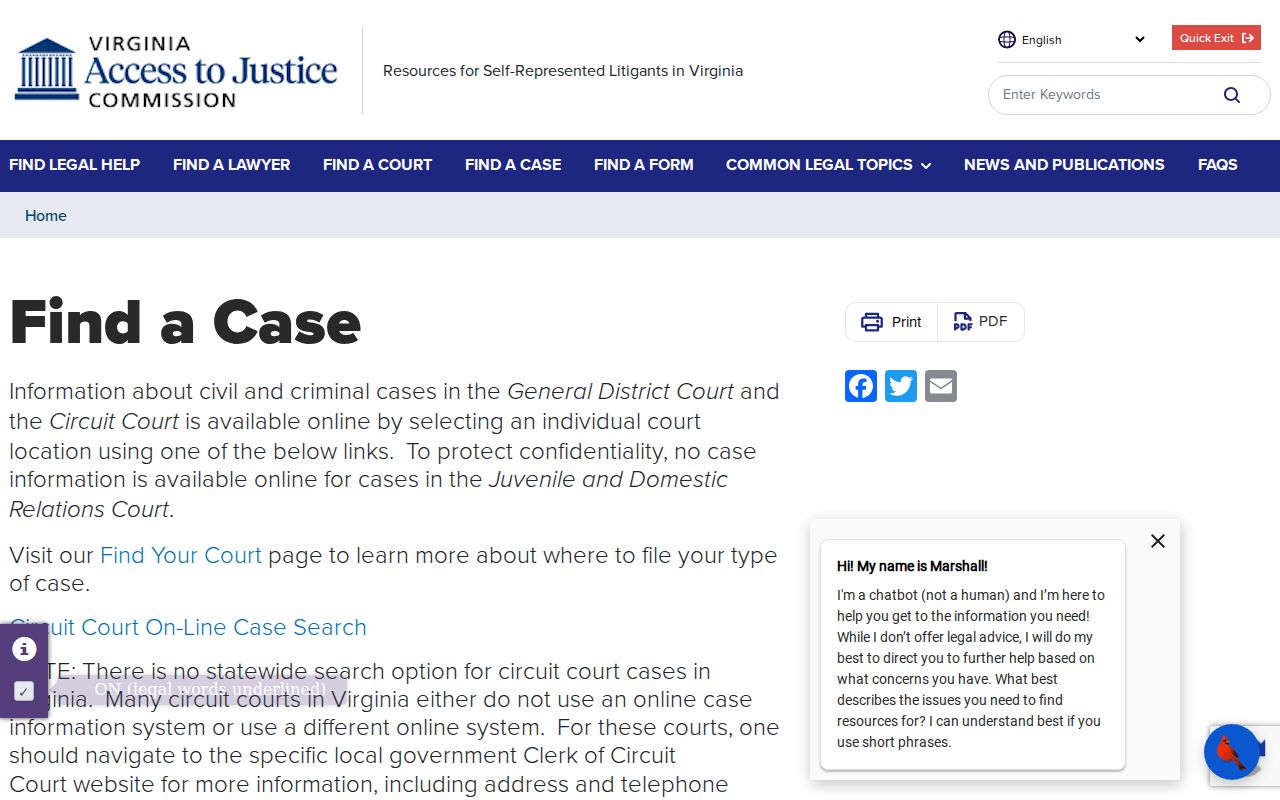
Do not read a missing statewide result as a finding that no process exists.
Scott County Warrants: Who Holds What
The issuing clerk holds the court file. The Scott County Sheriff's Office answers service-routing questions. FOIA goes elsewhere. The county FOIA officer handles existing county records, not court orders or restricted VCIN entries. The combined court page lists the GDC/JDR clerk plus the Gate City and Weber City traffic blocks. A town name routes a citation, but Scott County runs no separate municipal court.
Which Warrants Stay Restricted
Public case information has limits. Juvenile law-enforcement files stay closed. Sealed records and protected investigative details stay closed too, along with some court documents. A missing result can mean the wrong court, a local Circuit search requirement, a new entry, or a legal restriction. It does not prove a Scott County warrant exists or does not exist.
Access rules:
Virginia Code § 2.2-3704 governs public-record requests and permits specific statutory exemptions.
A general records request does not override the limits for juvenile law-enforcement files in Virginia Code § 16.1-301.
Virginia Code § 19.2-54 sets timing and sealing rules for search-warrant affidavits.
Call the clerk named on the paper. When the serving agency is unclear, ask the Scott County sheriff or the original police department which office holds that step of the process. A blank screen is not the end of it.
Scott County Warrant Search Results
A matching case result is only a lead. It does not confirm a warrant is still active. Compare locality, court, full name, case number, offense, hearing date, and any disposition shown. The statewide interface offers no public warrant-number or active-status filter, and restricted service details may not appear in a Scott County warrant search.
| Court and locality | Match Scott General District Court or Circuit Court to the paper. |
|---|---|
| Case number | Use the number printed on the summons, notice, or clerk correspondence. |
| Hearing and event | Compare the listed date and disposition with any newer court notice. |
| Warrant status | Ask the issuing clerk whether a capias or warrant entry remains current. |
Details differ? Do not treat a name match as proof the file is yours. Call the court that owns the case, name the exact entry, and ask a Scott County clerk to confirm it.
Scott County Warrant Types and Court Records
Not every court paper is the same. An arrest warrant in Scott County grows out of a sworn complaint pushed through the magistrate process. A bench warrant, sometimes styled a capias, usually follows a missed court date or an ignored court order. Missed traffic dates run under their own statutes and court records. So the right clerk depends on the court printed on the case, not on the town name alone. Scott County's combined General District and JDR clerk keeps adult misdemeanor and traffic files. Juvenile records stay off the public internet. The Circuit Clerk holds the felony and Circuit records. A search-warrant affidavit sits under separate timing and sealing rules, so its availability says nothing about whether a search warrant was issued. Match the paper to the process. Use the Scott County arrest warrant guide or the bench warrant guide for the court paper you hold.
Scott County Warrant Resolution Steps
Start with the right phone. Traffic, adult misdemeanor, and JDR questions go to the combined clerk at 276-386-7341, Suite 203. Felony and Circuit files sit with 276-386-3801, Suite 102. Both counters share 202 West Jackson Street in Gate City and keep weekday hours, 8 a.m. to 4 p.m. Ask what the docket requires: an appearance, a motion, payment, or bond. Ask as well how the clerk will document the result. The Sheriff's Office at 276-386-7679 handles service routing but runs no warrant line and no walk-in surrender counter. Call before you drive, because a traffic payment that qualifies does not by itself recall a separate capias in Scott County.
Scott County Warrant FOIA Scope
Virginia FOIA covers records a public body already holds. It cannot make Scott County build a new warrant roster or answer a legal-status question. The county names Tina Seay as FOIA officer. Reach her at 190 Beech Street, Suite 201, Gate City, VA 24251; the phone is 276-386-6521, the fax 276-386-9198, and the email tseay@scottcountyva.com. Email, mail, fax, phone, or a walk-in all work. Scott County generally answers within five working days, subject to the law's extension and access rules. Name the record, the date range, and the office as precisely as you can. Ask for an estimate before any broad search. Court files belong with the court that maintains them. Juvenile law-enforcement records and sealed documents carry their own restrictions, and no county request opens VCIN or NCIC. Scott County's public-record request page names the FOIA officer and explains the process for an existing county-held record.